
Description
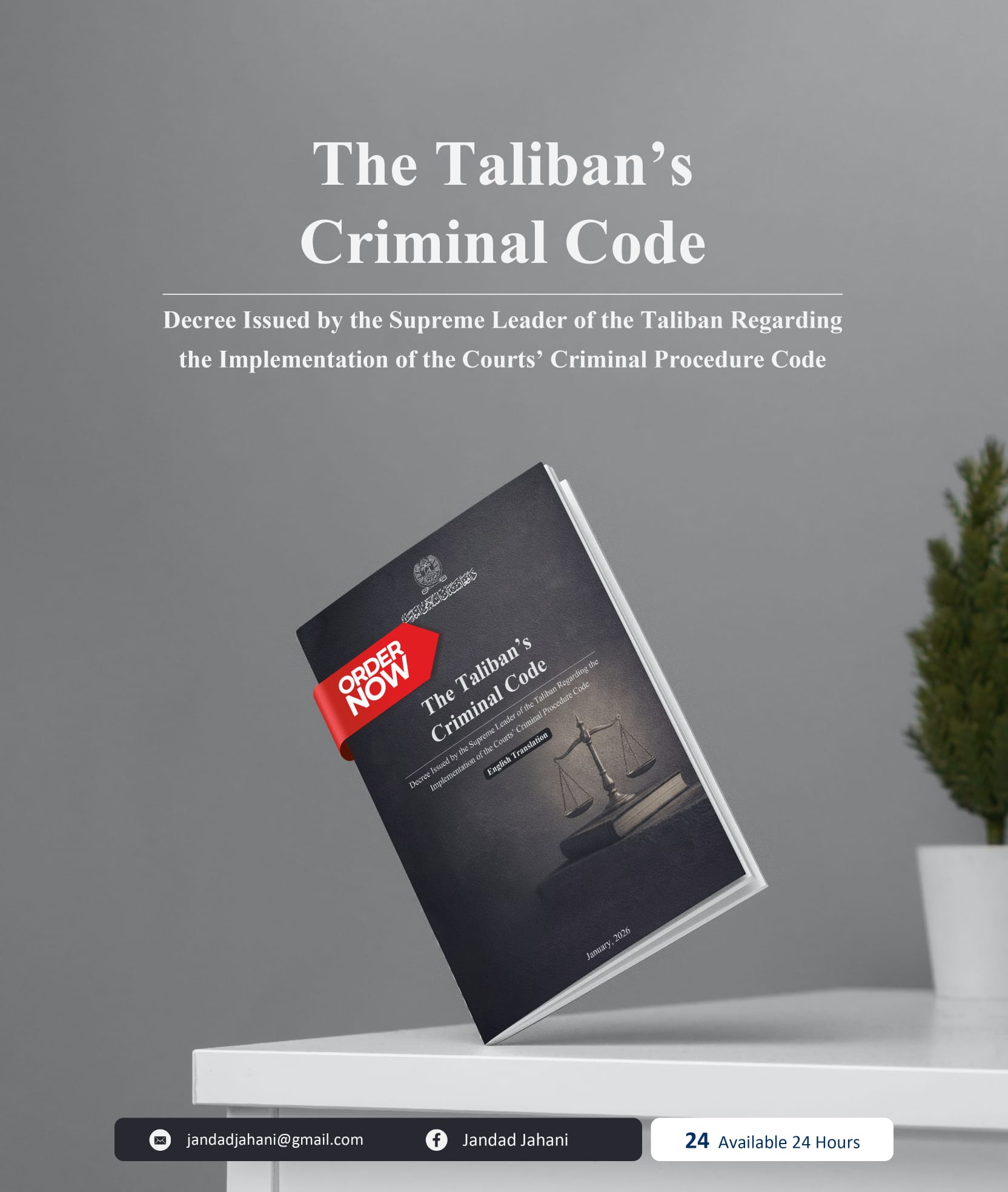
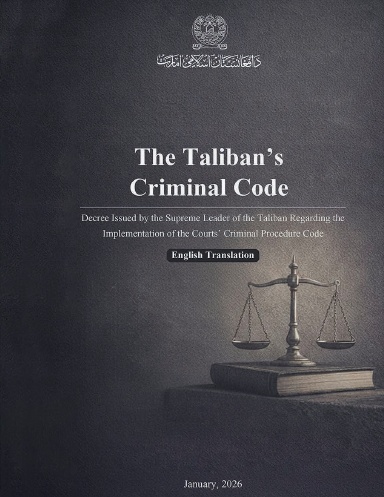
The Taliban’s Criminal Code is a professionally prepared English translation of a foundational legal and penal document issued by the Taliban in January 2016. This text represents one of the most comprehensive articulations of the Taliban’s approach to criminal law, punishment, judicial authority, and social regulation during their period as a non-state governing authority.
Released at a time when the Taliban exercised de facto control over large areas of Afghanistan, this criminal and penal code provides a rare and direct insight into how the movement conceptualized crime, justice, and enforcement. Far from being a collection of isolated rulings, the document functions as a structured legal framework—defining offenses, evidentiary standards, judicial discretion, and prescribed punishments—revealing how religious jurisprudence, centralized authority, and governance were integrated into a coherent criminal justice system.
For years, international analysts, research institutions, universities, and policy centers have emphasized that meaningful analysis of Taliban governance is impossible without access to their original legal texts. Reliance on secondary reporting, summaries, or selective quotations risks misunderstanding or distortion. This volume responds to that gap by presenting the document in full, in accurate English, allowing readers to engage directly with what the Taliban themselves formally stated—rather than interpretations imposed from outside.
The translation has been produced by a professional team of native Pashto speakers with specialized expertise in legal, judicial, and institutional language. Every effort has been made to preserve the original meaning, terminology, structure, and intent of the source text. No material has been added, omitted, summarized, or editorialized. The formatting, numbering, headings, seals, and internal organization of the original document have been retained as faithfully as possible, ensuring that readers encounter the text as a legal instrument rather than an adapted narrative.
This English translation is intended to serve as a primary-source reference for scholars, legal researchers, policymakers, journalists, human rights practitioners, and students of Islamic law, conflict studies, and governance in non-recognized or insurgent political systems. By making this document accessible, the volume enables informed comparative legal analysis and a clearer understanding of why the Taliban reject alternative lega

Reviews
There are no reviews yet.